


One Pager – Secondary Traumatic Stress in CACs
From the Southern Regional CAC
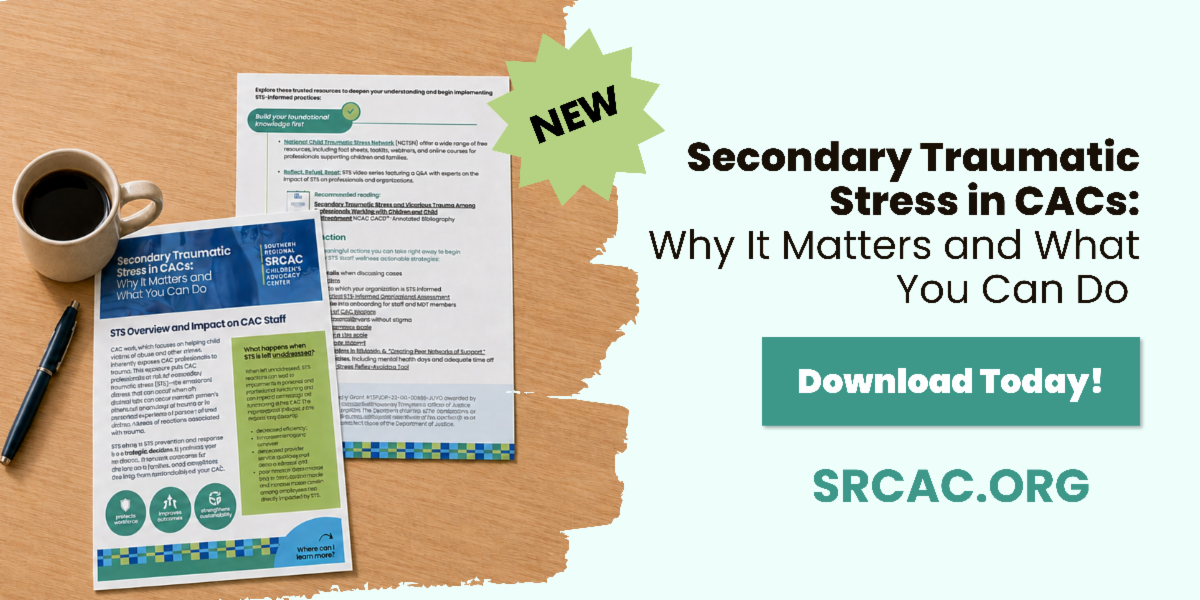 |
| The work of serving children and families affected by abuse can take a toll on the professionals who do it every day. Because children’s advocacy work involves repeated exposure to trauma, CAC-MDT professionals may experience secondary traumatic stress (STS), and its effects can extend throughout the organization. Our new resource, Secondary Traumatic Stress in CACs: Why It Matters and What You Can Do, offers a concise, practical starting point for understanding and addressing STS. What’s inside? This one-pager includes: An overview of STS and why CAC-MDT professionals are at risk The potential effects of unaddressed STS on individuals and organizations Trusted resources for building foundational knowledge Practical strategies to strengthen STS prevention and response Tools for organizational assessment, confidential monitoring, peer support, onboarding, and wellness policies How can you use it? Start a conversation: Use the resource as a brief discussion prompt during a staff meeting or MDT case review to help normalize conversations about STS. Support onboarding: Share it with new staff and MDT members to introduce STS early and reinforce that employee well-being is an organizational priority. Assess your current practices: Explore the linked tools to identify existing strengths and opportunities to become more STS-informed. Connect staff with support: Share the resource with individuals or teams who may benefit from practical strategies, peer support, or additional learning. Plan your next step: Choose one recommended action or resource to explore together and build from there. Investing in STS prevention and response protects your workforce, improves outcomes for children and families, and strengthens the long-term sustainability of your CAC. Access today!Supporting the people who do this work is essential to sustaining the work itself. We hope this resource helps your CAC begin—or continue—meaningful conversations and action around secondary traumatic stress. |


